
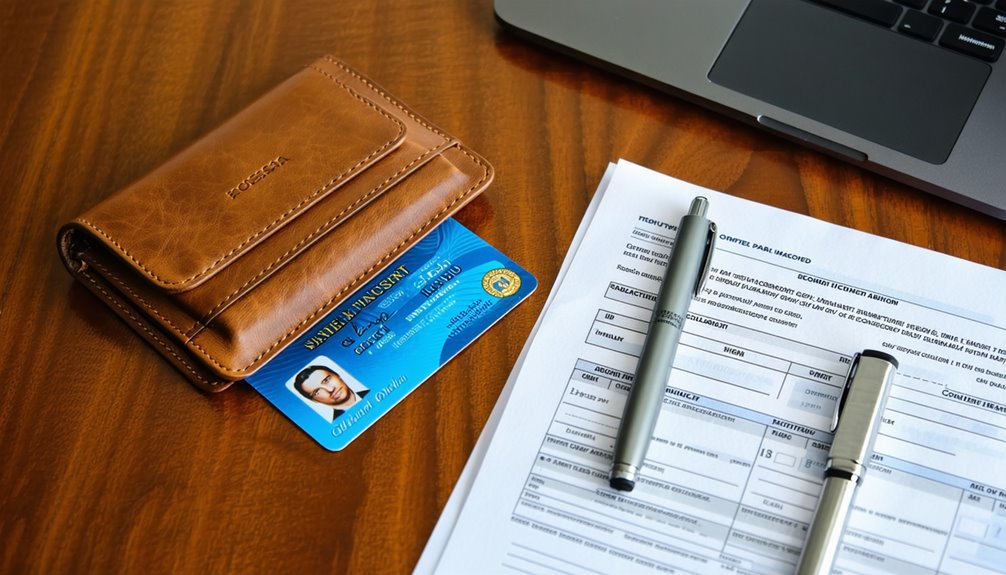
When you’re preparing for the Minnesota real estate test, it’s important to understand the identification requirements. You’ll need to present a valid primary ID that’s government-issued, along with a secondary ID to guarantee everything checks out. Both IDs must match your registration details, but there are specific guidelines you’ll need to follow. Let’s break down what you need to bring and avoid any last-minute surprises on exam day.
Valid Primary Identification Requirements
To gain entrance to the Minnesota real estate test, you must present valid primary identification that meets specific criteria.
Acceptable ID types include a state-issued driver’s license, a state-issued identification card, a U.S. passport, and a military identification card, among others. Your ID must be a government-issued document that includes a clear photograph and your signature, matching the name used for exam registration. It’s critical that your identification is unexpired and in the English language; expired or damaged documents won’t be accepted. Remember, only one valid primary ID is permitted, and it must be the original physical document—digital copies aren’t valid. Additionally, having proper ID is essential as it is a requirement when taking the Minnesota real estate licensing exam. Obtaining your license allows you to engage in various real estate transactions and ensures compliance with Minnesota property laws.
Ensuring your identification validity is important to avoid being denied entry to the test center.
Secondary Identification Requirements
When preparing for the Minnesota real estate test, it’s important to understand the requirements for secondary identification. Your secondary ID must display your full name and signature, confirming they match your primary ID and registration records. Acceptable secondary ID examples include a U.S. Social Security card, signed credit or debit cards, and wholesale store cards like Costco memberships. Remember, the ID must be current, unexpired, and in English. Additionally, ensure your secondary ID aligns with the exam day requirements to avoid any issues. The significance of signatures can’t be overstated; they must match across all forms of ID to avoid complications at check-in. Be cautious—laminated, altered, or electronic IDs won’t be accepted. Additionally, be aware that Wisconsin real estate licensing requires proper identification for processing applications. Prepare your secondary ID well in advance to guarantee a smooth exam day experience.
Name and Signature Matching Criteria
Ensuring that your name and signature match across all identification documents is key for a smooth experience during the Minnesota real estate test.
Discrepancies in names can lead to complications, so follow these guidelines:
- Your primary and secondary IDs must display the exact name as registered, including any suffixes or initials.
- Signatures on both IDs must be handwritten and clearly legible, matching the signature on file.
- If there are any name discrepancies, be prepared to provide legal documentation for verification. Additionally, ensure you understand the importance of dual agency regulations to navigate any potential conflicts of interest in real estate transactions.
Identification Document Restrictions
While preparing for the Minnesota real estate test, it’s significant to be aware of the specific restrictions regarding identification documents.
You must adhere to ID acceptance criteria that disallow expired IDs and any form of identification lacking a signature or photo. Photocopies and digital images of IDs are prohibited, as are temporary or paper licenses.
Additionally, all IDs must be in English. Certain documents, such as student IDs, employer-issued IDs, birth certificates, and personal documents without a government authority’s backing, aren’t acceptable.
If you bring IDs that don’t meet these criteria, it could lead to denied exam entry, so verify you’ve got the right documentation ready before test day. It’s also crucial to remember that the exam is administered by PSI Exams, ensuring a standardized testing environment.
Additional Exam Day Requirements and Protocols
To successfully navigate your exam day for the Minnesota real estate test, it’s important to understand the various requirements and protocols in place.
Here are some exam day necessities to keep in mind:
- Arrive at least 30 minutes early for check-in and security procedures.
- Bring only permitted items: your ID, exam appointment confirmation, and proof of education completion. This will help ensure that you validate user requests and avoid any unnecessary delays. Understanding ethical obligations in real estate practices can also enhance your preparation.
- Make sure you leave behind prohibited items like bags, electronics, and food, as they won’t be allowed in the exam room.
Frequently Asked Questions
What if My ID Is Expired on Exam Day?
If your ID’s expired on exam day, you’ll face denial of entry due to identification requirements. It’s important to replace your expired ID beforehand to avoid implications like forfeiting fees and rescheduling delays.
Can I Use a Student ID as Primary IDentification?
You can’t use a student ID as primary identification for the Minnesota real estate exam. Acceptable ID types include a government-issued ID, like a driver’s license or passport, which must be valid and match your name.
What if My Name Has Changed Recently?
If your name’s changed recently, you’ll need to provide supporting documentation, like a marriage certificate or court order, to update records. Make sure your ID matches your registration name, including any suffixes.
Is There a Fee to Retake the Exam if I Fail?
Yes, there’s a fee to retake the exam if you fail. Minnesota’s exam retake policies require you to pay a $65 testing fee for each attempt, including both national and state portions.
What Should I Do if I Lose My ID Before the Exam?
If you lose your ID before the exam, contact the testing center for guidance. Explore ID replacement options quickly and prepare alternate documents. Follow exam day procedures to guarantee you’re ready for testing.
References
- https://www.usrealtytraining.com/blogs/minnesota-real-estate-exam
- https://www.prepagent.com/real-estate-exam-by-state/MN/minnesota-real-estate-license
- https://mn.gov/commerce-stat/pdfs/re-license-guide.pdf
- https://mn.gov/commerce-stat/pdfs/real-estate-prelicense-app.pdf
- https://www.usrealtytraining.com/blogs/how-to-get-a-real-estate-license-minnesota
- https://www.agentadvice.com/real-estate-license/minnesota/
- https://mn.gov/elicense/a-z/index.jsp?id=1083-245823
- https://www.hennepin.us/en/residents/licenses-certificates-permits/minnesota-state-id
- https://mn.gov/commerce/licensing/list/real-estate/applications.jsp
- https://www.examsmart.com/state-real-estate-licensing/minnesota